Showing posts with label Teaching. Show all posts

Thursday, 13 February 2014

To the Parents

I had a revelation last week. It might not seem a great one to many but personally it has added to my development as a teacher, my awareness of the child's learning as a whole and not just in the class...the Whole Child - what I was fundamentally interested in back in my PGCE days. 

It has occurred to me that that these inspired, imaginative, wonderfully wacky, mostly so un-selfconscious little artists that are in my classroom might not feel so inspired and imaginative and wacky and un-selfconscious when they leave the 'art room'. I have just assumed they carry this with them to the home and if the inspiration grabs them, they'll get their crayons and paints and glue and deal with what's in their mind. 

However.

We attempted to make papier mâché bowls last week in year 4. It worked last year, somehow we all struggled a bit this year. Not a problem. We made it an evaluation lesson. This was invaluable actually and I'm glad it happened. Especially for our little perfectionists (including yours truly).
 
I did make (a mistake in hindsight I wonder) the decision to let the kids take their newspaper bowl home and try and do something with it, resurrect it, build on it, start again....basically see this through. The parents' reactions didn't even occur to me. Until one texted me a photo of the thin newspaper rough bowl-shape his daughter had made, 'jokingly' saying that the new art room [with the new school build] couldn't come soon enough.

And that's when it hit me. Any inspiration or motivation for some children stops at the school gates when the parents ask what on earth is that and the child's self-consciousness flames up and they are unable to express what they want to do with their art, their creation. In class most of them were excited about doing something with it at home and I bet none of them have. I'd sent most of these kids home with some scrappy papier mâché with the incentive that they could fix it and be inspired to do something. I forgot someone could be in the car or at the door going wtf is THAT? And this poor child trying to explain. She's just going to put it in the bin. Which child is strong enough to tell them to keep hold of it, they have plans for it.  Maybe one, possible two in that class. And so begins the downward spiral of forever squished creativity and unconsidered self esteem levels.

No wonder adults don't get out their crayons anymore. I have actually seen it in process now. And once it leaves my art room, what can I do? I have no other help to continually boost these kids' creativity and imaginative processes once they put down my paintbrushes. Maybe the grown-ups have little confidence. As Picasso said:

Please, parents, art is just as important to your child's development, not only academic but spiritual and creatively. She may not need it in the career you're seeing her in but she will need mental release and self expression and the space and confidence in which to do this. So what if she brings home a crunchy indescript piece of paper, to you that's what it is. To her she sees colours and shapes and connections, it's art, ideas and thoughts...it's HERS. Bite your tongue. Watch her do something with it, watch her plan, watch her work, watch her think, inspire her yourself if she's stuck, let her reach an outcome of her own, take a photograph before and of the finished article and then you can be done with it, content in the knowledge you have let your child see a plan through to the end. The journey is just as important as the destination. Give them the time and space and above all belief and encouragement to show you what their vision is. Maybe this is all you need to get your crayons back out after all this time...
Pablo and Paloma Picasso: Why not get arty WITH your child?
It's not what they've brought home, that is the final product. Art should never end in my class, let them continue it in their home space. Let them get messy. Let them invent and create. These are the industrial designers, inventors and thinkers of our future society, remember...they need their brains expanded!

I know he's not an artist. Or in primary school. But as a parent I always try and think like Michio Kaku's Mum:


Monday, 26 August 2013

A look at other Art Bloggers

I've just taken a look through my blogs in my reading list...I usually head straight to Cassie Stephens...she makes me giggle...and she has this awesome guitar apron that I WANT!! However, today Olive at Olive ART caught my eye again as she hit on a subject that's at the back of my mind for the year coming up.

I think I focus on it already but I really want the children to start to automatically offer an opinion on a piece of famous art or even an artist's style. I know I encourage discussion and opinion in a structured format that leads into the lesson but would like to find another way that tells them it's OK to ask a question or offer a thought at any time. So I liked this idea from Olive and also this one too that makes up more of a lesson.

Olive ART! Do You???: Looking at Art: She has a bulldog clip with her chosen painting and her bubble whiteboard next to it with some magnetic words. And this allows the children to choose their word that they associate with the picture, whether it is something they see or something that they feel or even the mood of the painting. Whichever it may be, as she says, it encourages the children to learn to 'see' more in art.

Her other recent development I like would to see how she gets on with, has the pupil discussing the quote and the piece of art, do they like or connect with the painting, do they agree or disagree with the artist's quote, and the children concluding from this what it is to make art...it's not just about paint and pencils and making marks. I'd like to do this with my year 6s.

I would have activities like this in an area every week and for every year in which they could discuss, describe, think about a piece of art, a type of art movement or an artist. I used to do things like this with Maths or Literacy and especially Science, around the classroom, for early finishers, say.

(Having said that, I am a peripatetic...well, between the classrooms, not schools...art teacher...I have yet to have my own art room. We are having a new school built and plans were for it to be completed for the school year 2014/15 with me having a room. However...seeing as we're in the Middle East, it ain't working like that. And I will continue to lug that huge not-quite kid-proof Ace Hardware toolbox around, with it's handle and clips held on with bits of string. I'm going to see how much longer it'll last!)

Thanks Olive, you've inspired me to start collecting and creating activities like this for my fantasy classroom! In the meantime, for a plenary at least.

Friday, 23 August 2013

Architecture in Primary Art

I've been having a look at the draft curriculum plans that are due to be bought in in September 2014 in England.

I'll be honest, I'm only coming up to my second year teaching art and so haven't really absorbed myself in any great number of art curriculum documents. Technique and skill have been my focus much like Patty over at Deep Space Sparkle. She feels that, like me, her job is to bring the art world to children, get them being creative and developing their skills at the same time. She doesn’t grade or follow standards and she is not reviewed. She uses the word ‘organic’. I feel I have been allowed that capacity by my school as well. As was always the case when I started teaching, developing self-esteem and confidence, this time in art (mine as well as the kids!) has also been my drive.

The point I'm getting to is that I am not familiar with any previous art curriculum besides that which was incorporated within the various cross curricular frameworks (yay...) as it's not been forced to be my main focus, for which I am thankful.

Was architecture a big feature in previous curriculum incarnations?

I jigged the year 5's Victorian art programme up a bit last year and we all loved it so I want to stick with it. We became architects for the day and studied and designed a Victorian house or building. I want to incorporate a Victorian architect's work and give some personality to the theme.

This summer, I took a purely-educational-and-for-research-purposes-only trip to Alton Towers. From the heights of the Runaway Train, at varying angles on Nemesis and Air and using an interior study of the ride 'Hex' I was able to study the beautiful yet striking Alton Towers house itself (for no other reason, I remind you! Killing Zombies in Duel, going 100kph in 2.5 seconds at 4.7g on Rita and having my stomach removed from me on Thirteen whilst my daughter laughs hysterically next to me was all in my break ;-) ).

Alton Towers itself is an imposing yet beautiful Victorian Gothic building designed by Augustus Welby Northmore Pugin, a rather busy and productive man of his time who actually died of exhaustion at 40 years old.
 
 
He was the architect behind the new Palace of Westminster/Houses of Parliament in London, completed in 1847. Pugin is said to have made over two thousand drawings for furniture, wallpaper, soft furnishings, tiles, woodwork, and metal work for the House of Lords.

There isn’t really anything on him for kids yet he designed many British landmarks. I suppose this is where I remember my kids are primary...maybe there is more to study at secondary level…

But then I remember that we teach them about the great artists so why not the great architects? Of which there are just as many. (Incidentally apparently I'm related to Sir Christopher Wren...I do still need to research this...but it was my Nan's claim to fame I think!). I was taught to be a science specialist with the belief that the children I am educating are future citizens, constructors, designers and engineers of our world and therefore need to start questioning and querying and prodding and understanding the world around them NOW. Why not do this in Art too? A fun look at architecture in Primary school could just spark something in one of those gorgeous minds.

Incidentally, in my research so far for the new curriculum for the UK, if that's what floats your boat:
“…the department published proposals to reform the national curriculum so that it is slimmer, focused on essential subject knowledge and which, especially in the core subjects of English, mathematics and science, compares favourably with the curriculums taught in the most successful education jurisdictions in the world."
“... the current system of ‘levels’ used to report children’s attainment and progress will be removed.  It will not be replaced. We believe this system is complicated and difficult to understand, especially for parents. It also encourages teachers to focus on a pupil’s current level, rather than consider more broadly what the pupil can actually do. Prescribing a single detailed approach to assessment does not fit with the curriculum freedoms we are giving schools.”
“The new programmes of study set out what should be taught by the end of each key stage.  We will give schools the freedom to develop a curriculum which is relevant to their pupils and enables them to meet these expectations.”
"Schools will be able to introduce their own approaches to formative assessment, to support pupil attainment and progression. The assessment framework should be built into the school curriculum, so that that schools can check what pupils have learned and whether they are on track to meet expectations at the end of the key stage, and so that they can report regularly to parents." 

Some useful links outlining the timescale and pathway of the UK curriculum, with particular focus on Art and design of course!

The main link:
http://www.education.gov.uk/schools/teachingandlearning/curriculum/nationalcurriculum2014/a00220600/draft-national-curriculum-programmes-of-study

Art and Design’s Programme of study:
http://www.education.gov.uk/schools/teachingandlearning/curriculum/primary/b00198792/art/ks2
No mention of architecture…only in KS1.

The old Assessment system:
http://www.education.gov.uk/schools/teachingandlearning/curriculum/primary/b00198792/art/attainment

It looks like they’ll be removing that as it is too confusing for parents. Well, I got the hang of it after 4 years, why can’t they? J

Art and Design before the new Curriculum comes in:
http://www.education.gov.uk/schools/teachingandlearning/curriculum/primary/b00198792/art

“…no longer statutory…” “…free to develop…” in preparation for the new curriculum. Sounds great. Ooh, I’m allowed to do that already!

Draft Art and Design curriculum from September 2014…
Can’t find anything on the gov.uk website, I just get sent to the ICT development committee. Dull. ;-) 

I continue my search. In the meantime, I’ll stick to my freedom to develop the art programme for my KS2ers. Even the government says it ok. Happy days. 

Saturday, 4 May 2013

Art Lesson of the Week

This week's lesson was a good one for a few reasons.

Year 3: City of Fratsia, sketching, oil pastel and wash.


One: they learnt something new. Always good. Today was perspective and 3D work.
Two: they practised other sketching skills.
Three: they needed to delve into their imaginations to start with.
Four: it also required a bit of 'drawing what you see' whilst in that imagination. Always a tricky one, especially with the younger ones who have this ability to transpose any object regardless of what angle they view it from, to front on and draw it thus.

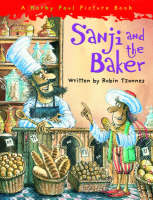
It was the lovely and mystical city of Fratsia that was the class topic and we just followed it in art but creating our own cities (imagination) of Fratsia. We read the book, 'Sanji and The Baker' (by Robin Tzannes and Korky Paul) and studied the city drawings and perspective (new word). We loved how the buildings towered off to the side and rose up the hill. We also loved the colour and medium that Paul had used. We thought about what we would see if we looked straight at a house? What would we see if we were sitting down on a seat in the street looking to the house to our right? (Observational drawing)


We worked with our basic sketching skills to plan our city and think about how the buildings we have created from our imagination would look like from an angle. This was a challenge for most of them. But once they saw what they were looking at and applied it to theirs, it flowed and clicked :-) We then worked with oil pastels and built up this beautiful city like Korky Paul did. Some chalk pastels slipped into the oil pastel box inadvertently so that became a lesson in itself as they were finding out the difference between chalks and oils, in feel, effect, the residue it makes. This was great fun, coming up with adjectives to tell the difference.

I encouraged them to use the oil pastels as we were finishing up with a wash of the colour of their choice (out of red, orange or blue). So they learned they can end with a wash, not just begin with one. I wanted them to see what happens when watery paint touches wax or oil. Those that used chalk in places had a lesson too. they predicted and observed what happened when they ran their final wash over. It did create an awesome sandstormy effect for some! Lovely! I download some of their pics soonish.

In hindsight, I would probably work on laying down more prep work for perspective and focus on observational drawing for a little while...outside of the classroom, drawing the school buildings from different angles. This could be brought in as a follow-up in perspective in year 4.
 

Friday, 26 April 2013

Art Lesson of the Week

Year 6 - charcoal

A new technique for year 6. They thoroughly enjoyed this. This was the first time they had used charcoal. I had the pencils in my room but I brought the willow charcoal along, the stuff that I used as a schoolgirl and loved it. I remember the feeling it gave me, I felt like a proper artist, using a proper tool, so I wanted and hoped they would feel the same too.

We had made clay masks based on our Maori designs we had been working on. As far as the charcoal was concerned we focused on building up the picture by tone - light, mid and dark - rather than drawing an outline and filling it in. This was a challenge for most but they did really well when it clicked what they were looking for.

I will miss this class. They embrace every technique, they try everything, they ask questions, they put their own style on the technique. They want to be there in my lesson and I love seeing them working! 


Sunday, 24 February 2013

My recent purchase for school…

…well, OK, for me mostly. Mad Murphy prompted me to look at this; I chose the Modern artists, maybe the other book with 50 not so modern artists will be on my wishlist!

50-Modern-Artists-You-Should-Know

The first page I randomly turned to was Kasimir Malevich, an Russian artist I had never heard of. His first picture shown was his Black Square:


Hubby was questioning why artists paint what appears to be something so bland on the surface. I agreed but mentioned that some artists were making waves, creating a new school of art and were the movers and shakers of their time. They could have been protesting against some other movement or aiming to catch the audience’s attention or to start a new trend. And so it appears that Malevich was doing just so.

"The Black Square of Kazimir Malevich is one of the most famous creations of Russian art in the last century. The first Black Square was painted in 1915 to become the turning point in the development of Russian avant-garde. Black Square against white background became the symbol, the basic element in the system of the art of suprematism, the step into the new art."
Source:http://www.hermitagemuseum.org/html_En/04/b2003/hm4_1_30.html)

Taking in the Rye. 1911
Suprematism. 1915
I’ve found a great site for abstract info and inspiration: Abstract Art Framed. It doesn't just cover abstract artists and their work but also inspiration, ideas and tips.

In year 3 we're looking at the abstract artist, Sean Scully. he enjoys working with blocks, lines and colour which is essentially the definition of abstract art. We had a great discussion wondering why his piece 'Catherine' was so called! One boy has taken to the concept of abstract art very quickly and seemed to explain it clearly...he being not so articultae in other areas...something clicked with him!

Tuesday, 12 February 2013

If you have been following my blog or the one before (Muscat Mitchells) then you will remember that I originally worked in another school in the next district. I was a year 2 teacher to fourteen completely and wonderfully different children...12 nationalities in that class. I had one super, calming assistant (I know...spoilt much!) who I will always adore.

Today I paid them a visit as I found some resources that I still had from last year that they might need (oooops!). Any excuse for a visit I suppose, shame I had to hold on to this item and then forget about it!

They are now in a new building and it is so open, fresh and new. I only spent an hour there but I managed to disrupt the lessons of my old colleagues quite nicely! :-) Don't you just hate these inpromptu yet well-meaning visits?!

I saw my old class....I was so excited! I felt such a part of this school, it was small and intimate and I really felt my place straightaway. And to see those friendly smiles today was lovely. I have to remind myself why I left; I know I made the right decision.

Upon the kids' reactions when I walked in I realised that I left over 7 months ago and that is a long time in a 6-7 year old's life. A couple looked at me with a quizzical look and one or two ignored me. Hmmm.

One of the EAL girls did come up to me with the biggest smile and spoke to me in English. She never said a word in English last year so it was nice to hear her speak, it's funny how it changed how I see her. Communication is such an essential part of life, whether it be vocal, gestured or written. But to have a common language makes it a touch easier! The best reaction was from one boy who looked at me for a good few seconds, squinted a bit, pointed his finger and said 'Let me guess...Miss N..?' 

I will arrange a time and hopefully stay a bit longer next time. I ultimately wanted to see my TA, Miss C. She has now qualified and is teaching year 5. So to see her in action was brilliant. She was in the middle of an art lesson, they were sketching portraits. Anyway, a big hug and she introduced me to a few of the new children. I had taught some of the others whilst I was doing some supply work there. So I had a few casual 'Hey Miss N!'

As we hugged each other goodbye we made a plan to be in touch more as their family is leaving at the end of the summer. What hit me is that she said I was like a sister...we talked a lot last year and got to know each other more than colleagues. Another resolution!


Saturday, 27 October 2012

I haven't posted in a month!

I haven't even been surfing Pinterest! (well...a bit...)

I spend all my spare time planning and checking I'm ready for the next lesson. It's becoming a little more than a part-time job now so I need to rein that in a little. I do however, have so much more time for my own children, I see them every day around school and it's a lovely feeling being able to have a little Mummy minute, spying on them in the playground a little.

I'm really taking the time with the lessons as I want to make sure they complete most things so they see projects through. Lessons that are scheduled for one session have led in to two and I'm beginning to deal with that fact - it's ok, I'd rather do that than be stressed trying to rally them to speed up and complete. That's not the point. Enjoyment and a sense of completion are as important in art as is the learning. However, it's put me a bit behind so I still have a sense of worry. But I AM the Art department so as long as I'm not out of control!

That'll be the two weeks before Christmas.

So my new Maori art plans are going very well. It's been great fun! And I swear by playing relevant music in the classroom to try and encompass the whole experience. I will write with the Maori plans eventually.

I have discovered a new art teacher and website - www.paulcarneyarts.com. I found him when trying to find an interesting and different charcoal lesson for Year 6. What's appealing to me just now is his section on Assessment and levelling. Will offer comment on that in another post.

Tuesday, 25 September 2012

:-D

 
 It dawned on me today that I think I am in love with my job.

(I'm awaiting that dip after the honeymoon period though....)
 
I'm just going through the previous plans for Year 6 and I am starting to really think how I can change it now to create my own plans and put my mark on Art education at the school.
 
So...year 6 have Aboriginal Art coming up according to last years plans (remember that I was just going to settle in to the job, work with what I had and then experiment) but they did an aspect of that in Year 3. I know and appreciate that I can progress and show a different aspect to this art. But hey, why not take the opportunity to introduce them to the art of another nation?
I have been in my element this afternoon. It's a day off and all I've been doing is researching Maori art, myths, legends and history. I am now in the process of creating three lesson plans and resources from scratch as I really cannot see much on TES or Pinterest (I  KNOW!!) for instance.
Anyway, doing it from scratch means I can create what I need. This will be in a couple of weeks so hopefully it will come together and I'll post them here.

For you, Mad Murphy! LOVE this picture!

Tuesday, 18 September 2012

Year 4’s Monet Introduction

This was one of the lessons that I was quite nervous about...it's all well and good getting the children to practise and produce various art techniques, fun activities and creative sessions but teaching them about the great masters just squeezed a little more pressure on my newbie shoulders. 

How-EVER! This was the lesson that gave me the realisation that teaching Art is just so rewarding and as fulfilling as being a regular class teacher. I proved to myself that I do have the interest and certainly the passion for this subject and especially teaching it. I've got to know Monet through the planning of the lesson and I realised I was reading about him in the end for my own pleasure! I just hope the kids take some of my interest with them! So today was the start of their recreation of 'Poppies near Argenteuil'. 

images

When I built up to the announcement that they would be creating their own, they reacted how I expected. And how I wanted them to, actually! It was a unanimous "nooooooo/whaaaaaaat???/Ican'tdothat/tooooohaaaaard" etc. What I wanted to start achieving was a turn-around of their initial negative attitude. And we started to by the end of the session!
IMG_5990
All today was was an introduction to Monet and Impressionism, how Monet and his contemporaries painted...they ended up being able to tell me how to recognise a impressionist piece, well, certainly what they'd look for. We also started our paintings with our background wash. We experimented with building up the colour, and effects 
using the sponges and the paintbrushes.

 IMG_5992 IMG_5994 IMG_5997 IMG_6005  

I've had to take pictures of the kids to make a contact sheet so I can learn their names. I do well in the lesson and then forget a few of them the following week! At least 120 names...could be worse I suppose! And it's only week 2! ************************************************************************************************************** So, week 2 and we’re working on the foreground. I really focussed on them developing and using their observation skills…how far do the field of poppies stretch? do they have stalks? can you see the lady smiling at you? where is she looking? why can you not see her legs or feet? is she really a stick figure? (seriously...) how many people can you see? etc… This was a very interesting exercise…maybe 4 or 5 children thought about the detail from the outset and this was evident in their work.

We laid the finished pieces out and pretended we were walking around a gallery. We talked about each other’s work , encouraging positive words and thoughts. This was a good exercise, I’ll do this again.

They all enjoyed it and were interested to learn more about Monet. When they learned of his eye operation and the fact that he painted with poor vision for a while, two of the girls took their glasses off (much to my panic!) to see how it would go. One girl loved it! She is probably the artist of the class so I think she enjoyed painting like one of the Masters!

Monet 002 Monet 005 Monet 007 Monet 028 Monet 029 Monet 031 Monet 033 Monet 036
   

Thursday, 13 September 2012

Beautiful Oops!

(Apologies for the dubious editing in this post...it wasn't playing ball tonight. Not operator error. Honest.)
 
Such a great lesson! Such a good idea! I came across this book by accident, just surfing the Pinterest treasure chest for art inspiration.
 

It's by Barney Salzberg...he's also written other young children's books, 'Animal Kisses' and 'I Love Dogs' .

Already I've had some of the children come to me wanting to start again as they "have made a mistake/done it wrong/don't like it". Unless the project is completely unworkable or right off topic I will always tell them to give it a chance.

I've used the examples of those children to start this lesson with Year 3. I'm doing this with Year 3 as it's their first year in Key Stage 2 and they now have Art with me rather than with their class teacher. They told me they feel nervous as well as excited and that they are worried about making mistakes. PERfect introduction to this book and this session. 

Here's a video of the book. Enjoy!


It helps young children to have fun with their mistakes. I gave them a few ripped bits of paper, heaps of scraps and some pens and glue. They set themselves challenges, they even set their classmates challenges. Not one child told me they had no ideas or felt uninspired. Such fresh, unfettered, unrestricted, unassuming minds. I hope that I help them stay so, and as a result I make them feel secure in their art lesson, no fear of making mistakes.
From a scrap of red cellophane

A red squiggly line 
    
A hole ripped in the paper became the mouth


School 004 School 008 School 009 School 010 School 011 School 012 School 014 School 020 School 024 School 029 School 030  School 033 School 035 School 032School 037 School 039 School 040